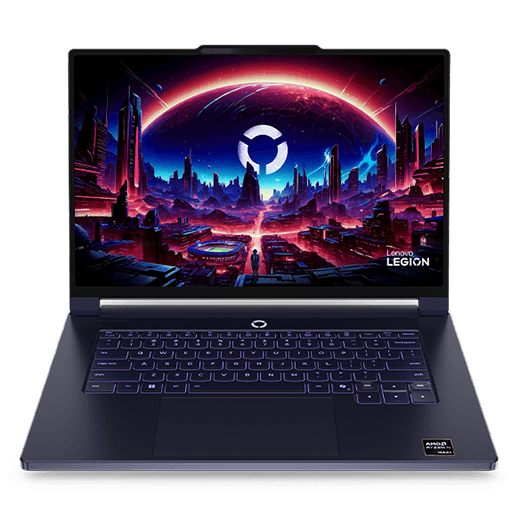
Lenovo's Legion 7a 15 combines premium design with AMD's Strix Halo processor. Its gaming performance is underwhelming, but substantial discounts make it an interesting option for productivity and AI workloads.
Summary
Our Lenovo Legion 7a 15 review revisits its value after major discounts. See how Strix Halo performs in gaming, productivity, and local AI workloads.
The Lenovo Legion 7a 15 combines AMD's Strix Halo processor with a lightweight chassis, beautiful OLED display, and strong productivity performance. Its integrated graphics still struggle to compete with dedicated gaming GPUs, but substantial discounts make it a much more compelling option, particularly for professionals working with local AI models.
Greater value after launch?
When I first reviewed Lenovo's Legion 7a 15, I called it one of the worst-value gaming laptops I'd ever tested.
And at its original $2,500 to $3,500 pricing, I stand by that criticism.
The problem is that just days after launch, Lenovo started offering discounts of around $1,000. That's an enormous reduction, even by Windows laptop standards, and it completely changes how we should evaluate this machine.
At its original price, the Legion's gaming performance makes little sense. But with a substantial discount, you're getting a lightweight, premium-feeling laptop with a beautiful OLED display, a capable AMD Strix Halo processor, and some unique benefits for professional workloads.
It's still not the laptop I'd recommend if gaming is your main priority. However, if you want a portable machine for productivity, local AI, and occasional gaming, there's now a much stronger argument for buying one.
AMD Strix Halo: More Than Just a Gaming Processor
The Legion 7a 15 uses AMD's Strix Halo architecture, which combines powerful CPU cores with a particularly capable integrated GPU.
We've seen this technology before in ASUS's ROG Flow Z13, one of the most impressive devices we've reviewed.
The Legion comes with either an 8-core Ryzen AI Max+ 388 or a 12-core Ryzen AI Max+ 392, compared to the 16-core Ryzen AI Max+ 395 in the Flow Z13.
Both Legion configurations use Radeon 8060S integrated graphics.
Now, integrated graphics are usually a disadvantage when comparing gaming laptops. But Strix Halo has another benefit: its shared memory architecture.
Unlike a traditional laptop with a dedicated GPU and a fixed amount of video memory, Strix Halo allows the CPU and GPU to share system memory.
This can be particularly useful when running local AI models that require more GPU-accessible memory than a conventional gaming laptop provides.
It doesn't mean the Legion is automatically faster at AI workloads, and Nvidia still has a significant software advantage through CUDA. But for certain memory-intensive tasks, Strix Halo offers an interesting alternative.
That's why I think this laptop makes more sense as a portable workstation than a traditional gaming laptop.
Let's be clear: the new pricing doesn't suddenly make the Legion 7a an exceptional gaming laptop.
In Cyberpunk 2077, the 12-core model averaged 69 FPS, matching the much cheaper Gigabyte Aero X16. However, its 1% lows were slightly worse, indicating less consistent frame rates.
The 8-core configuration performed worse again, averaging 65 FPS.
The Legion 7a matches the cheaper Aero X16 in average FPS, showing why it's difficult to recommend purely for gaming.
In Marvel Rivals, the gap between the Legion and competing Nvidia laptops becomes considerably larger.
The 12-core Legion averaged 64 FPS, compared to 97 FPS for the ASUS Zephyrus G14 with an RTX 5070 Ti and 120 FPS for the HP Omen Max 16 with an RTX 5080.
Even with substantial discounts, the Legion 7a can't match dedicated Nvidia gaming GPUs in demanding titles like Marvel Rivals.
Even in Forza Horizon 6, neither Legion configuration managed to average 60 FPS at Ultra settings.
The 12-core model reached 53 FPS, while the 8-core model managed 54 FPS. The Zephyrus G14 achieved 83 FPS.
Neither Legion 7a configuration reaches 60 FPS at Ultra settings, although both remain capable of lighter gaming.
These results reinforce an important point: you shouldn't buy the Legion 7a purely for gaming performance.
At similar prices, laptops with dedicated Nvidia graphics can deliver substantially higher frame rates.
However, if gaming is something you do occasionally rather than your main reason for buying a laptop, its integrated graphics become easier to accept.
The Legion's integrated Radeon 8060S outperforms the Flow Z13, but still falls behind laptops with dedicated Nvidia graphics.
If gaming is your priority, you can get considerably better performance for the money.
CPU Performance: Better Than Its Gaming Results Suggest
The CPU side of Strix Halo is considerably more interesting.
In Cinebench 2026, the 12-core Legion scored 5,194 points in multi-threaded performance. That's almost identical to the Zephyrus G14, although the cheaper Legion Pro 5i and Flow Z13 both performed better.
The 8-core Legion managed 4,147 points, putting it much closer to the cheaper Gigabyte Aero X16.
The 12-core Legion 7a delivers competitive CPU performance, although the Flow Z13 and Legion Pro 5i perform better.
Geekbench 6 paints a more positive picture.
The 12-core Legion scored 18,183 points in multi-core performance, outperforming the Zephyrus G14 and Legion Pro 5i.
The Legion 7a's 12-core processor performs particularly well in Geekbench, outperforming several competing gaming laptops.
These are strong results for general productivity, although the difference between the 8-core and 12-core configurations is worth considering.
We also saw an excellent result in Photoshop.
The 12-core Legion scored 13,262 points in PugetBench, finishing ahead of every competing laptop in our comparison.
The 12-core Legion 7a leads our Photoshop benchmark, highlighting its strengths beyond gaming.
So, while the Legion struggles to justify its gaming branding, there's real potential here for professionals who need a portable machine for more demanding work.
Just remember that performance varies by application, and its Photoshop results don't necessarily translate into equally strong performance across all creative software.
Lightweight and Premium Build Quality
One thing I appreciated during the original review was how portable this laptop is.
At just 1,553 grams, it's remarkably light for a 15.3-inch laptop, particularly one with this kind of processing capability.
It's even lighter than the smaller Flow Z13, which weighs 1,629 grams.
At 1,553 grams, the Legion 7a is remarkably lightweight for a 15.3-inch laptop with this level of processing power.
The chassis also feels well-built, with a sturdy lid and a compact design that avoids the large rear extension found on many gaming laptops.
The keyboard is comfortable, relatively quiet, and includes large arrow keys alongside two remappable buttons.
Unfortunately, the keyboard backlighting isn't great. Too much light escapes around the keys rather than through their characters, which can make the labels difficult to see at certain angles.
The dark chassis also picks up fingerprints relatively easily.
These aren't major problems, but they're worth mentioning.
Stunning OLED Display
The Legion's 15.3-inch OLED display is another genuine strength.
It has a crisp 2560x1600 resolution, vibrant colors, and a fast refresh rate, making it enjoyable for everything from productivity to gaming.
In our testing, the display reached 523 nits of brightness, close to the Zephyrus G14's 542 nits.
The Legion 7a's OLED reaches 523 nits, placing it close to the Zephyrus G14 and ahead of several competitors.
Its biggest weakness is the glossy finish, which can produce distracting reflections in bright environments.
Still, this is an excellent display, particularly when you consider the laptop's discounted pricing.
Heat and Fan Noise: Reasonably Well Controlled
At 53 decibels under heavy CPU load, the Legion 7a is quieter than the Zephyrus G14 but louder than the Flow Z13.
Lenovo has also done a reasonably good job managing heat and fan noise.
During light tasks, the Legion generally stays quiet and doesn't feel particularly warm.
Under maximum CPU load, both configurations produced 53 decibels of fan noise, which is reasonable compared to many traditional gaming laptops.
The Legion's keyboard hotspots reach 45–47°C during heavy CPU workloads, warmer than several competing laptops.
The keyboard surface reached a maximum of 47°C on the 12-core model during Cinebench, although I didn't find the laptop uncomfortable during normal use.
Another positive is that hot air isn't exhausted directly onto your mouse hand.
There is one annoyance, though. On the default Balanced performance mode, simple tasks like installing applications or using the webcam can sometimes cause the fans to spin up.
Overall, cooling and noise are not major reasons to avoid this laptop.
Ports, Trackpad, and Speakers: Some Odd Compromises
The Legion has a good selection of ports, including an SD card reader.
It's also designed around USB-C charging, which is convenient for users who want to avoid proprietary charging connectors.
However, there's an important catch.
Both USB-C ports support charging, but only the right-side port supports the laptop's full 180W power input.
Even when using that port, we observed the battery slowly draining under extremely demanding workloads, at approximately 4% per hour.
The mechanical trackpad is another disappointment. It feels relatively cheap compared to what you'd expect from an expensive laptop.
The speakers aren't particularly impressive either.
And like other Strix Halo laptops, the memory is soldered, meaning you can't upgrade it later.
Unfortunately, we also don't have reliable battery life results yet because of issues with our testing software.
Upgradeability and Battery Life
Like other Strix Halo laptops, the Legion has soldered memory, meaning you can't upgrade the RAM after purchase.
Unfortunately, we also can't provide reliable battery life results yet.
Our battery testing software has been experiencing issues, so we're holding off on publishing results until we can test the laptop properly.
Conclusion: Who Should Buy the Legion 7a 15?
After revisiting the Legion 7a 15, I've changed my opinion.
I still wouldn't recommend buying it at its original $2,500 to $3,500 pricing. And if you're primarily interested in gaming, I'd generally choose something with a dedicated Nvidia GPU.
But when the Legion receives discounts approaching $1,000, it becomes a much more compelling laptop.
You're getting a lightweight and well-built 15-inch machine with an excellent OLED display, strong CPU performance, and an integrated GPU that can access a large pool of shared memory.
That combination makes it particularly interesting for professionals experimenting with local AI models, developers with memory-intensive workloads, or anyone who wants one portable laptop for productivity and occasional gaming.
The 12-core configuration is especially worth considering for CPU-heavy applications, while the cheaper 8-core model may offer better value for users with lighter performance needs. Memory capacity and the actual sale price should also influence which version you choose.
However, if gaming is your primary use case, I'd still consider alternatives such as the ASUS Zephyrus G14, HP Omen Max 16, or Lenovo's own Legion 7a 16-inch with dedicated Nvidia graphics.
Ultimately, Lenovo's pricing strategy made this laptop look far worse than it actually is.
And that's the bigger lesson here: don't judge a laptop by its original asking price or gaming branding alone.
At full price, the Legion 7a 15 is difficult to recommend. On a sufficiently large sale, it can be a genuinely good purchase for the right person.